

How to Transition from Non-IT, B.Com, or Mechanical Engineering to SAP Consultant in 90 Days
If you are currently working in a factory floor, managing vendor billing at a logistics firm, working in conventional accounting making ₹15,000 to ₹25,000 a month, or feeling stuck in a non-IT job, you have likely wondered:
"Can someone without a computer science degree or coding background actually become an SAP consultant and earn ₹6 to ₹12 Lakhs per annum in India?"
The unequivocal answer is YES. In fact, the world's most effective SAP functional consultants are almost never computer programmers. They are former accountants, mechanical plant supervisors, procurement executives, and commerce graduates who understand real-world business processes.
In this mentor's guide, we outline the exact 90-day transition framework used by hundreds of students at ERP Academy to break out of low-paying non-IT jobs and secure lucrative SAP consulting roles at top MNCs across India.
The Great Secret: Why SAP Needs Domain Experts, Not Coders
Software development (Java, Python, C++, Web Development) requires writing thousands of lines of syntax, designing algorithms, and debugging software code.
SAP Functional Consulting is completely different: SAP is an Enterprise Resource Planning system pre-built with decades of global business best practices. A functional consultant's job is business configuration, not coding:
- A manufacturing company needs to purchase raw steel from 50 vendors. What approval rules apply? How is stock counted?
- A retail giant needs to close quarterly financial books across 12 countries. Which balance sheet accounts are debited?
- A distribution network ships 10,000 orders daily. How are shipping points determined?
Who understands how purchase orders, vendor invoices, and physical warehouse inventory actually work in real life?
- A mechanical engineer or supply chain executive understands inventory, Bills of Material (BOM), and procurement cycles far better than a fresh CS graduate.
- A B.Com or M.Com graduate understands debits, credits, balance sheets, and depreciation schedules immediately.
Your non-IT domain background is not a handicap—it is your primary superpower.
Module Mapping: Which SAP Module Matches Your Background?
Choosing the wrong SAP module is the single most common reason aspiring consultants fail. Align your existing domain knowledge with the corresponding SAP functional module:
| Your Current Background / Degree | Ideal SAP Module | What You Will Configure | Starting Salary Potential (India) |
|---|---|---|---|
| Mechanical, Civil, Industrial, Electrical Engineering | SAP MM (Materials Management / Sourcing) | Enterprise structures, Vendor Evaluation, Purchasing, Physical Inventory, MRP | ₹5.5 – ₹9.0 LPA |
| B.Com, BBA (Finance), M.Com, CA Inter, CMA, MBA Finance | SAP FI / FICO (Financial Accounting & Controlling) | General Ledger, AP, AR, Asset Accounting, Cost Centers, Universal Journal (ACDOCA) | ₹6.0 – ₹10.0 LPA |
| B.Sc, BCA, Technical Background (Loves Logic & SQL) | SAP HANA / SAP BTP / ABAP Cloud | In-Memory CDS Views, Calculation Views, Data Provisioning, Cloud Extensions | ₹6.5 – ₹11.0 LPA |
| Sales Executives, Marketing, BBA, Logistics Associates | SAP SD (Sales and Distribution) | Sales Orders, Pricing Procedures, Delivery, Billing, Partner Determination | ₹5.0 – ₹8.5 LPA |
| HR Executives, MBA (Human Resources) | SAP SuccessFactors / HCM | Employee Central, Talent Management, Payroll, Performance & Goals | ₹5.0 – ₹8.0 LPA |
The 90-Day Transition Roadmap
Here is the exact day-by-day blueprint followed by our successful career switchers at ERP Academy:
┌────────────────────────────────────────────────────────┐
│ Month 1 (Days 1–30): Foundation & Core Business Cycles │
├────────────────────────────────────────────────────────┤
│ • Master ERP Architecture & Navigation (GUI + Fiori)   │
│ • Configure Enterprise Structure in SPRO               │
│ • Master Master Data Creation (BP, Material, GL)       │
│ • Execute Standard Transaction Cycles (P2P or O2C)     │
└────────────────────────────────────────────────────────┘
                           │
                           ▼
┌────────────────────────────────────────────────────────┐
│ Month 2 (Days 31–60): Integration & Deep Customizing   │
├────────────────────────────────────────────────────────┤
│ • Master Cross-Module Integration (MM-FI via OBYC)     │
│ • Special Business Processes (Subcontracting, STO)     │
│ • Real-time Error Resolution & Troubleshooting         │
│ • Business Blueprint & Functional Spec Documentation   │
└────────────────────────────────────────────────────────┘
                           │
                           ▼
┌────────────────────────────────────────────────────────┐
│ Month 3 (Days 61–90): Resume Branding & Interview Prep │
├────────────────────────────────────────────────────────┤
│ • Transform Resume: Reframe Domain Work into Projects  │
│ • Build Naukri & LinkedIn Consultant Profile           │
│ • 100+ Scenario-Based Interview Question Mock Sessions │
│ • Apply to IT Service Firms & Boutique Consultancies   │
└────────────────────────────────────────────────────────┘
Month 1 (Days 1–30): Enterprise Structure & Core Transactions
- Week 1: Foundations: Understand client-server architecture, landscape (Development $\rightarrow$ Quality $\rightarrow$ Production), and the difference between ECC and S/4HANA.
- Week 2: Enterprise Hierarchy: Configure Company Code, Plants, Storage Locations, Purchasing Organizations, and assign them in
SPRO. - Week 3: Master Data: Create Material Masters (
MM01), Business Partners (BP), General Ledger Accounts (FS00), and understand field status controls. - Week 4: The Standard Cycle: Execute end-to-end cycles:
- Purchase Requisition (
ME51N) $\rightarrow$ Request for Quotation (ME41) $\rightarrow$ Purchase Order (ME21N) $\rightarrow$ Goods Receipt (MIGO) $\rightarrow$ Invoice Verification (MIRO).
- Purchase Requisition (
Month 2 (Days 31–60): Advanced Customizing & Troubleshooting
- Week 5: Special Procurement: Learn Consignment, Subcontracting (movement
541/543), and Stock Transport Orders (STO with delivery). - Week 6: Integration Engine: Master automatic account determination in
OBYC(BSX,WRX,PRD,GBB). Learn how MM connects directly to the financial balance sheet. - Week 7: Pricing Procedures: Configure condition tables, access sequences, condition types (
PB00,FRA1,RA01), and calculate taxes and freight. - Week 8: Project Artifacts: Learn how consulting projects run (ASAP / SAP Activate Methodology): Business Blueprints, GAP Analysis, and writing Functional Specification documents (
FS) for ABAP developers.
Month 3 (Days 61–90): Resume Re-Branding & Cracking Interviews
This is where 90% of self-learners fail: They apply as "Freshers" with zero project context.
How to Rebrand Your Non-IT Domain Experience:
If you worked 2 years as a mechanical supervisor in a manufacturing plant, do not write:
"2 years experience supervising lathe machines and checking vendor goods at gate."
Instead, reframe your real domain experience into enterprise business terminology:
"Domain Experience (2 Years): Managed end-to-end Procurement and Warehouse Operations. Handled Vendor Evaluation, Purchase Order verification, inventory reconciliation, and goods receipt tracking. Participated as an End-User / Core Team Member during SAP S/4HANA Sourcing implementation."
This is 100% honest, authentic, and immediately transforms you from an untested candidate into a valuable domain-fluent consultant who understands enterprise ground realities!
Top 5 Traps to Avoid When Transitioning
- Trap 1: Watching YouTube Tutorials Without System Practice. You cannot learn swimming from a book, and you cannot learn SAP by watching videos. You must spend at least 1–2 hours daily executing transactions in a live S/4HANA system.
- Trap 2: Memorizing Dumps Instead of Concepts. Interviewers can spot memorized answers in 30 seconds. Focus on the business reason behind every configuration step.
- Trap 3: Falling for Fake Experience Certificate Scams. Never buy fraudulent 4-year experience letters from unscrupulous institutes. Background Verification (BGV) agencies at top MNCs verify PF accounts and tax returns; fake documents lead to permanent blacklisting. Rebrand your actual domain experience honestly instead.
- Trap 4: Neglecting Communication Skills. Functional consultants interact directly with business managers and client stakeholders. Practice explaining configuration steps in clear, structured English.
- Trap 5: Trying to Learn 3 Modules Simultaneously. Master ONE module thoroughly (either SAP MM or SAP FI) before exploring secondary integrations.
Real Student Success Stories at ERP Academy
- Rohan S. (Mechanical Engineer $\rightarrow$ SAP MM Consultant at Capgemini): Worked for 2 years at an automotive tier-2 supplier near Pune earning ₹22,000/month. Enrolled in ERP Academy's SAP MM program. After 90 days of live S/4HANA practice, cracked an interview with Capgemini at ₹6.8 LPA.
- Pooja M. (B.Com Graduate $\rightarrow$ SAP FICO Associate at Wipro): Was working as a data entry tally operator in Delhi at ₹18,000/month. Mastered S/4HANA Finance, New GL, and Asset Accounting. Landed an SAP FICO role at Wipro at ₹7.2 LPA.
Your background is not an obstacle. With the right roadmap and expert guidance, your transition can be completed in the next 90 days.
Frequently Asked Questions (FAQ)
Does an SAP consultant need coding or programming knowledge?
No. Functional modules like SAP MM, SAP FICO, SAP SD, and SAP HCM require zero coding. Functional consultants configure business rules in customizing (SPRO) and design processes. Programming is handled exclusively by technical consultants (ABAP / Fiori developers).
Can a B.Com graduate learn SAP FICO?
Yes, absolutely! Commerce and accounting graduates are the most naturally equipped candidates for SAP FICO because they already understand debits, credits, profit & loss statements, balance sheets, and tax deductions.
Is mechanical engineering relevant to SAP MM?
Yes. Mechanical engineers have deep understanding of plant operations, machinery parts, bills of materials (BOM), maintenance spares, and industrial purchasing lifecycles, making them exceptional candidates for SAP Materials Management and S/4HANA Sourcing.
How much can a non-IT fresher earn after completing SAP training in India?
Starting salaries for career transitioners with hands-on SAP fluency typically range from ₹5.5 Lakhs to ₹8.5 Lakhs per annum across Indian IT service firms (TCS, Infosys, Wipro, Accenture) and Global Capability Centers (GCCs).
Ready to Accelerate Your Career with SAP Career?
Stop struggling with fragmented tutorials. Get trained personally by Akshay Kumar (6+ years experience, 500+ placed professionals) with real-time S/4HANA server access, business blueprint scenarios, and 100% interview preparation.

Related Tutorials & Articles
Continue learning with more insights from ERP Academy experts.
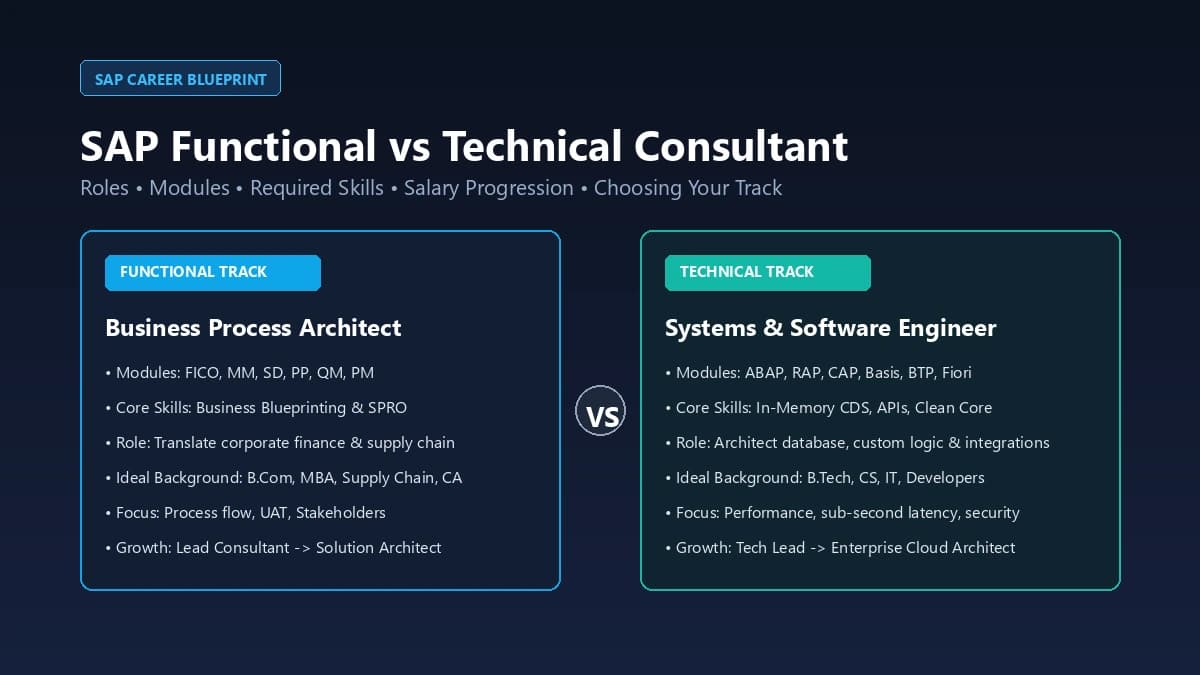
SAP Functional vs Technical Consultant: Roles, Skills, Salary & Career Path Comparison
Deciding between SAP Functional (FICO, MM, SD) and Technical (ABAP, Basis, BTP) consultant paths? Compare day-to-day responsibilities, required skills, salary growth, project roles, and how to choose the right track for your background.
Read Guide
SAP Certification Cost in India (2025–2026): Exam Codes, CER006 Vouchers, Eligibility & Is It Worth It?
Planning to get officially SAP certified? Here is a transparent, mentor-backed guide to SAP certification costs in India, CER006 Cloud Certification Hub subscription fees, module exam codes (MM, FICO, HANA), exam syllabus, and whether global certification guarantees a job.
Read Guide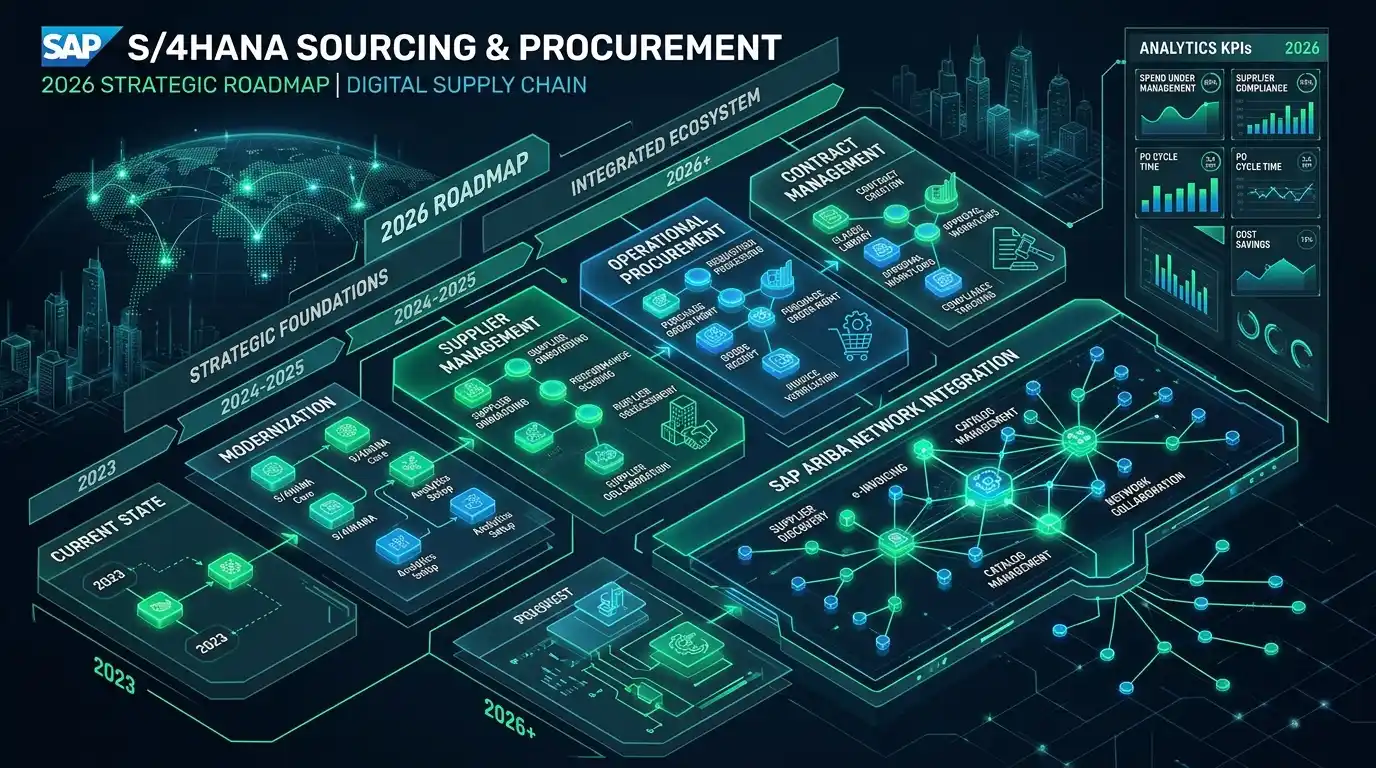
SAP S/4HANA Sourcing & Procurement: Complete Module Roadmap, Salary & Career Scope in India
Looking to specialize in SAP S/4HANA Sourcing and Procurement (Next-Gen SAP MM)? Complete mentor-backed career roadmap covering the modern syllabus, Central Procurement, SAP Ariba integration, Fiori sourcing apps, and realistic salaries across India.
Read Guide