
Introduction
In an era where environmental responsibility has evolved from corporate social responsibility to business imperative, organizations worldwide are under unprecedented pressure to demonstrate genuine commitment to sustainability. With climate change regulations tightening, stakeholder expectations rising, and competitive advantages increasingly tied to ESG performance, sustainable business practices have become essential for long-term viability and growth. SAP Sustainability 2025 addresses these challenges by providing a comprehensive platform that transforms environmental and social responsibility from compliance burden into strategic advantage.
Modern sustainability management requires sophisticated measurement, reporting, and optimization capabilities that integrate seamlessly with core business processes. SAP Sustainability 2025 delivers these requirements through an intelligent platform that enables comprehensive ESG tracking, carbon accounting, circular economy implementation, and stakeholder reporting while driving operational efficiency and cost reduction.
Organizations leveraging SAP Sustainability report significant improvements: 40% reduction in carbon emissions, 35% improvement in resource efficiency, 50% faster ESG reporting processes, and 25% increase in sustainable revenue streams. These outcomes demonstrate the platform's effectiveness in creating genuinely sustainable business operations.
The Sustainability Imperative
Global Environmental Challenges
- Climate change requiring immediate action and carbon neutrality goals
- Resource scarcity driving circular economy adoption
- Biodiversity loss necessitating ecosystem protection measures
- Pollution and waste management requiring comprehensive solutions
Regulatory and Stakeholder Pressure
- Mandatory ESG reporting requirements across major markets
- Carbon taxation and emissions trading systems
- Supply chain due diligence and transparency requirements
- Investor and customer demand for sustainable practices
Core SAP Sustainability Capabilities
1. Comprehensive Carbon Management
Enterprise Carbon Accounting:
- Real-time emissions tracking across all business operations
- Scope 1, 2, and 3 emissions measurement and reporting
- Carbon footprint analysis by product, service, and business unit
- Automated carbon accounting with audit trail maintenance
2. ESG Performance Management
Integrated Sustainability Reporting:
- Automated data collection from enterprise systems
- Compliance with global frameworks (GRI, SASB, TCFD, EU Taxonomy)
- Stakeholder-specific reporting and communication
- Real-time sustainability dashboard and KPI tracking
3. Circular Economy Enablement
Resource Optimization and Waste Reduction:
- Material flow analysis and optimization
- Waste stream tracking and reduction strategies
- Product lifecycle assessment and eco-design
- Reverse logistics and recycling program management
4. Sustainable Supply Chain Management
Supplier ESG Assessment and Collaboration:
- Supplier sustainability scoring and risk assessment
- Collaborative sustainability improvement programs
- Sustainable procurement policies and automation
- Supply chain transparency and traceability
Industry Applications
Manufacturing and Industrial Operations
- Energy efficiency optimization and renewable energy integration
- Waste reduction and circular manufacturing processes
- Sustainable product design and lifecycle management
- Carbon-neutral operations and net-zero commitments
Retail and Consumer Goods
- Sustainable sourcing and ethical supply chain management
- Product sustainability labeling and transparency
- Circular business models and take-back programs
- Customer engagement in sustainability initiatives
Financial Services
- Sustainable finance and green investment products
- Climate risk assessment and scenario planning
- ESG integration in credit and investment decisions
- Sustainability-linked financing and performance incentives
Technology and Services
- Carbon-neutral digital operations and cloud services
- Sustainable IT infrastructure and equipment lifecycle management
- Remote work optimization and digital transformation
- Innovation in sustainable technology solutions
Implementation Best Practices
Strategic Sustainability Planning
- Materiality assessment and stakeholder engagement
- Science-based target setting and roadmap development
- Integration with business strategy and operations
- Change management and cultural transformation
Technology Integration and Data Management
- Enterprise system integration for automated data collection
- Data quality assurance and validation processes
- Real-time monitoring and alert systems
- Predictive analytics for sustainability optimization
Stakeholder Engagement and Reporting
- Multi-stakeholder communication strategies
- Transparent reporting and progress tracking
- Third-party verification and assurance processes
- Continuous improvement and target refinement
"SAP Sustainability has transformed our approach from compliance-driven reporting to strategic sustainability leadership. We've not only reduced our environmental impact but also discovered new revenue opportunities and improved operational efficiency through sustainable practices." - Chief Sustainability Officer, Global Manufacturing Company
Future of Sustainable Business
Emerging Technologies
- AI-powered sustainability optimization
- Blockchain for supply chain transparency
- IoT sensors for real-time environmental monitoring
- Digital twins for sustainability scenario modeling
Business Model Innovation
- Circular economy and product-as-a-service models
- Carbon-negative business operations
- Regenerative business practices and nature-positive impact
- Stakeholder capitalism and shared value creation
Conclusion
SAP Sustainability 2025 represents the evolution of environmental and social responsibility from corporate obligation to strategic advantage. By providing comprehensive measurement, reporting, and optimization capabilities, the platform enables organizations to build sustainable business models that drive both environmental impact and financial performance.
Success with SAP Sustainability requires commitment to transformation, stakeholder engagement, and continuous improvement. Organizations that embrace comprehensive sustainability strategies will not only meet regulatory requirements and stakeholder expectations but will also build resilient, future-ready businesses that create lasting value for all stakeholders.
Ready to lead in sustainability? Connect with our sustainability specialists to design a comprehensive strategy that transforms your environmental and social impact while driving business success.

Akshay Kumar
SAP Expert and Training Specialist with 6+ years of experience. Helped 500+ professionals advance their SAP careers.
Related Tutorials & Articles
Continue learning with more insights from ERP Academy experts.

SAP Business Network 2025: Enhancing Supplier Collaboration
Comprehensive supplier collaboration platform featuring intelligent supplier discovery, real-time order management, advanced risk assessment, ESG integration, and supply chain resilience optimization.
Read Guide
SAP FICO Career Roadmap 2025–2026: A Mentor's Step-by-Step Guide for Commerce & Finance Professionals in India
Confused between traditional accounting and SAP FICO? Read an honest, mentor-backed 90-day roadmap covering syllabus, real S/4HANA T-Codes, realistic salaries in India, and how to crack consultant interviews without getting trapped by fake promises.
Read Guide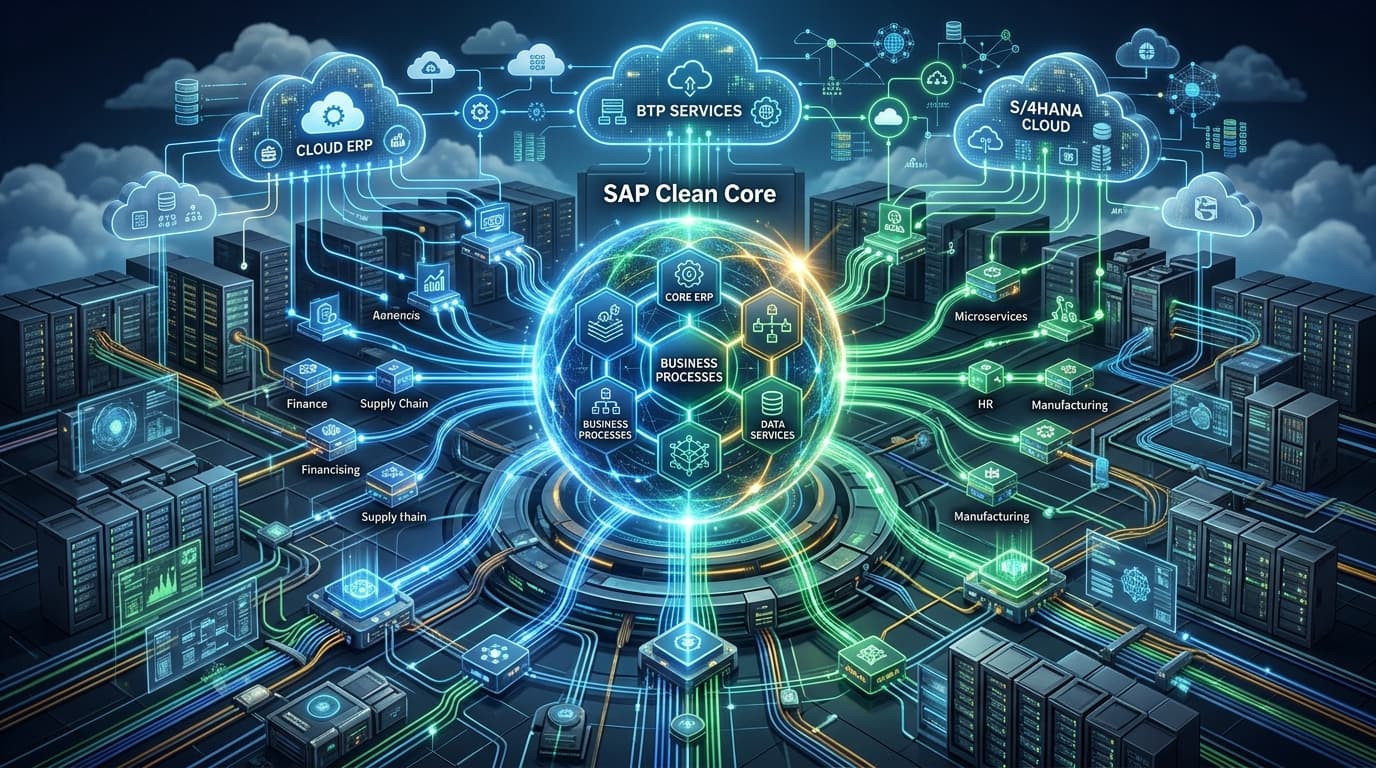
Why SAP Clean Core Is Making or Breaking S/4HANA Migrations (And What Developers Need to Know)
Tired of hearing 'Keep the Core Clean' buzzwords? Here is an architect's practical guide to what SAP Clean Core actually means, why legacy Z-programs choke upgrades, ABAP Cloud vs Classic ABAP, and how to build cloud-ready extensions on BTP.
Read Guide