
Top 35 SAP MM & S/4HANA Sourcing Interview Questions & Answers (Scenario-Based for 2025/2026)
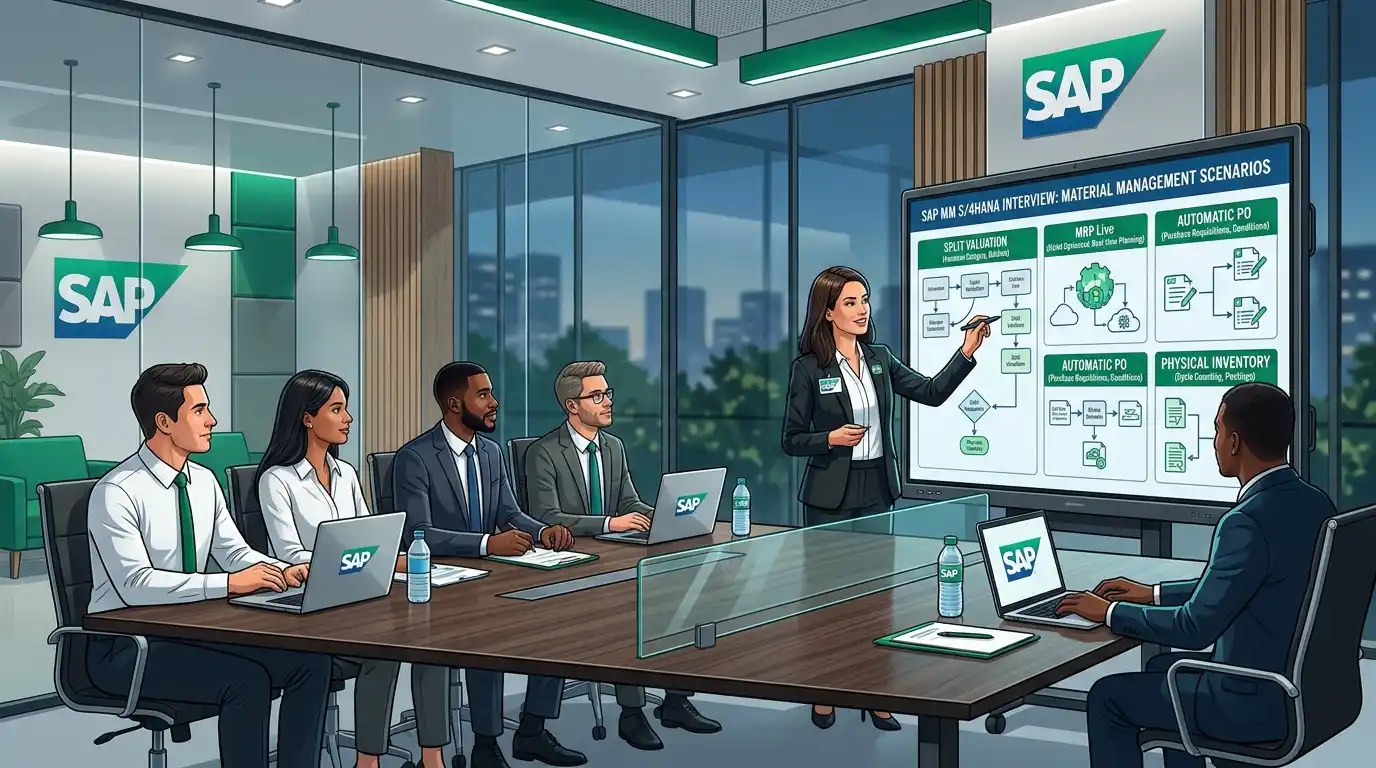
Top 35 SAP MM & S/4HANA Sourcing Interview Questions & Answers (Scenario-Based)
Whether you are interviewing for an SAP MM Associate Consultant opening at Infosys, a Senior Consultant role at Deloitte, or an internal support analyst position at a multinational corporation, one thing is certain:
Modern technical interviewers do NOT ask simple theoretical definitions like "What is a purchase order?" They test you with real-time enterprise scenarios, configuration pitfalls, and S/4HANA changes.
To help you clear your technical rounds with confidence, mentor Akshay Kumar and the senior consulting team at ERP Academy have compiled the top 35 scenario-based interview questions with detailed, technically precise model answers.
Category 1: Enterprise Structure & Master Data (S/4HANA)
Q1: What happens to transaction codes XK01, MK01, and FK01 in SAP S/4HANA?
Answer: In SAP S/4HANA, classic vendor master transactions (XK01, MK01, FK01) and customer master transactions (XD01, VD01, FD01) are obsolete and permanently redirected to centralized transaction BP (Business Partner).
Through Customer-Vendor Integration (CVI), every vendor or customer is created as a Business Partner. To create an MM vendor:
- Create a BP with general data (Category: Organization).
- Assign role
FLVN00for Financial Accounting vendor view (Company Code data). - Assign role
FLVN01for Purchasing vendor view (Purchasing Organization data).
Q2: Can a single Plant be assigned to multiple Company Codes in SAP MM?
Answer: No. In SAP enterprise structure, the relationship between Plant and Company Code is strictly Many-to-One ($N:1$). Multiple plants can belong to one Company Code, but a single plant can only be assigned to exactly one Company Code. However, a Purchasing Organization can be assigned to multiple plants across different Company Codes (Cross-Company Code Purchasing Organization).
Q3: What is the difference between a Purchasing Organization and a Purchasing Group?
Answer:
- Purchasing Organization: An organizational unit responsible for procuring materials and services, negotiating pricing conditions with vendors, and legally signing purchase contracts. It can be plant-specific, cross-plant, or cross-company code.
- Purchasing Group: An internal operational buyer or team of buyers responsible for day-to-day purchasing activities (creating PRs, POs). It is not linked to the enterprise organizational hierarchy in
SPROand operates independently across all purchasing organizations.
Q4: Explain the significance of the "Account Category Reference" in Material Master.
Answer: The Account Category Reference (ACR) acts as a bridge between Material Types and Valuation Classes. You link Material Types (e.g., ROH, FERT) to an ACR, and then link Valuation Classes (e.g., 3000, 7920) to that ACR. This ensures that when a user creates a raw material (ROH) in MM01, the system only permits them to select valid Raw Material Valuation Classes, preventing severe accounting errors.
Q5: How is Material Master deleted in SAP? Can you permanently drop it from the database?
Answer: In SAP standard, you cannot directly drop a material record from database tables like MARA or MARC. You must set a Deletion Flag using transaction MM06 at the client, plant, or storage location level. Once flagged, the material can no longer be used in new purchase orders or sales orders. Permanent removal requires executing an Archiving Run (SARA / Object MM_MATNR).
Category 2: Procurement Lifecycle & Document Control
Q6: Walk me through the complete Procure-to-Pay (P2P) cycle and the tables involved.
Answer:
- Determination of Requirements: Purchase Requisition (
ME51N) $\rightarrow$ TableEBAN. - Source Determination: RFQ (
ME41), Quotation (ME47), Comparison (ME49) $\rightarrow$ TablesEKKO/EKPO. - Vendor Selection & Purchase Order: PO Creation (
ME21N) $\rightarrow$ HeaderEKKO, Line itemEKPO. - Goods Receipt: Physical receipt (
MIGO) $\rightarrow$ S/4HANA writes toMATDOC(ECC wrote toMKPF/MSEG). - Invoice Verification: Accounts Payable match (
MIRO) $\rightarrow$ TablesRBKP(Header) andRSEG(Line item). - Payment Run: Financial settlement (
F110).
Q7: What is the difference between a Contract and a Scheduling Agreement?
Answer:
- Contract (
ME31K): An outline agreement with a vendor stating total quantity (Quantity Contract -MK) or total value (Value Contract -WK) over a fixed period without specific delivery dates. Deliveries occur only when a Contract Release Order is created. - Scheduling Agreement (
ME31L): An outline agreement where delivery dates and quantities are scheduled explicitly in Delivery Schedule Lines (ME38). No separate purchase orders are generated; goods receipts are posted directly against the scheduling agreement.
Q8: What is a Source List and what happens if the "Source List Requirement" is checked in Plant customizing?
Answer: A Source List (ME01) defines approved, blocked, or preferred supply sources for a material in a plant over specified validity dates. If the "Source List Requirement" checkbox is activated for a plant in customizing (OMET / SPRO), users cannot save a Purchase Order without the vendor being explicitly maintained as an approved source in the Source List.
Q9: Scenario: A buyer creates a PO with 100 units. The vendor ships 105 units. How does SAP handle over-deliveries?
Answer: SAP checks the Overdelivery Tolerance Limit maintained in the PO line item under the "Delivery" tab (derived from the Purchasing Info Record).
- If over-delivery tolerance is set to $10%$,
MIGOwill allow receiving up to 110 units. - If over-delivery is set to $0%$ and "Unlimited Overdelivery" is unchecked,
MIGOthrows error message:M7 022: PU Overdelivery tolerance exceeded by 5 units.
Category 3: MM-FI Integration & OBYC Account Determination
Q10: What are the mandatory parameters required for Automatic Account Determination in OBYC?
Answer:
- Chart of Accounts (
KTOPL) - Valuation Grouping Code (
BWMOD/ Valuation Modification) - Transaction / Event Key (
KTOSL- e.g.,BSX,WRX,PRD) - Account Modifier / General Modification (
KOMOK- used inGBB,PRD) - Valuation Class (
BKLAS- from Material Master Accounting 1 view)
Q11: Explain the exact accounting entries for MIGO when receiving standard priced materials at a variance.
Answer:
- Material Standard Price in Master: ₹100 per unit.
- Purchase Order Price: ₹120 per unit.
- Quantity Received in
MIGO: 10 units.
Accounting Postings:
- Debit: Stock Account (
BSX) = $10 \times ₹100 = \mathbf{₹1,000}$ (Always valued at standard price). - Debit: Price Difference Account (
PRD) = $10 \times ₹20 = \mathbf{₹200}$ (Expense). - Credit: GR/IR Clearing Account (
WRX) = $10 \times ₹120 = \mathbf{₹1,200}$ (Liability based on PO value).
Q12: What is the role of Transaction Key GBB and its Account Modifiers?
Answer: Key GBB is the offsetting entry for inventory movements during internal issues, stock adjustments, and scrapping where no purchase order exists. Key account modifiers include:
VBR: Consumption for Cost Center / Internal Order (Movement Types201,261).VNG: Scrapping / Shrinkage expense (Movement Type551).BSA: Initial stock upload (Movement Type561).INV: Inventory difference adjustments from physical count (MI07).
Category 4: PO Release Strategy (Approval Workflow)
Q13: What are the key elements required to configure a PO Release Strategy without workflow?
Answer:
- Characteristics (
CT04): Define fields from communication structureCEKKO(e.g.,CEKKO-GNETWfor Total PO Net Value,CEKKO-BSARTfor Document Type,CEKKO-WERKSfor Plant). - Class (
CL02): Create a Release Class under Class Type032(Release Strategy) and assign the characteristics. - Release Group: A 2-character code grouping strategies linked to Class
032. - Release Codes: Individual approver roles (e.g.,
L1for Manager,L2for HOD,L3for VP). - Release Indicators: Set status (e.g.,
Bfor Blocked,Xfor Released for PO transmission). - Release Prerequisites & Strategies: Define the approval sequence and monetary thresholds.
Q14: Scenario: An approved PO is modified by changing the delivery date. Will the release strategy re-trigger?
Answer: It depends on the Changeability Indicator set in the Release Indicator customizing:
- If Changeability is set to
1or2: Cannot be changed after release. - If Changeability is set to
4or6: Changing values re-triggers the release strategy only if the total net value increases beyond the tolerance percentage configured. - Changing only the delivery date or text typically does not reset release unless
CEKKOwas extended with date fields.
Category 5: Special Procurement (Subcontracting & STO)
Q15: Explain the complete process flow and accounting entries for Subcontracting.
Answer:
- BOM & Info Record: Create a Subcontracting Info Record (
Item Category L) and a Bill of Materials (CS01) for the finished product. - Subcontracting PO (
ME21N): Enter Item CategoryL. The system automatically explodes components from the BOM. - Transfer Components to Vendor (
ME2OorMIGO - 541): Movement541transfers raw material to "Stock Provided to Vendor" (No accounting entry generated, as goods remain company asset). - Goods Receipt of Finished Product (
MIGO - 101):- Dr: Finished Good Inventory (
BSX) - Cr: Change in Finished Stock (
BSV) - Dr: Subcontracting Service Expense (
FRL) - Cr: GR/IR Clearing (
WRX) - Dr: Raw Material Consumption (
GBB - VBO) - Cr: Raw Material Inventory (
BSX)
- Dr: Finished Good Inventory (
Q16: What is a Stock Transport Order (STO) and what are its types?
Answer: An STO is used to transfer inventory between plants.
- Intra-Company STO (Same Company Code):
- Without Delivery: Direct
MIGOwith Movement301or 2-step303/305. - With Delivery via Shipping (
SD): PO TypeUB, Movement641at issue,101at receiving plant. No invoice created.
- Without Delivery: Direct
- Inter-Company STO (Different Company Codes):
- Standard PO Type
NB, Customer and Vendor created for plants. - Movement
643at issuing plant, internal billing (IV) viaVF01, and101+MIROat receiving plant.
- Standard PO Type
Quick-Fire Interview Questions (Q17–Q35)
- Q17: What is Split Valuation? When identical materials are valued differently based on origin (Domestic vs Imported) or status (New vs Refurbished). Configured in
OMWC. - Q18: What is the difference between Gross Price and Net Price in a PO? Gross price excludes discounts, surcharges, and taxes. Net price includes discounts and additions.
- Q19: What is the function of the Evaluated Receipt Settlement (ERS)? Allows automatic invoice generation upon goods receipt without the vendor submitting a physical paper invoice (T-Code
MRRL). - Q20: What is a Consignment Purchase? The vendor stores goods on your warehouse floor, but legal ownership remains with the vendor until goods are consumed (Movement
411 K). Payment is settled viaMRKO. - Q21: What is the table for Purchase Order History? Table
EKBE. - Q22: Which movement type is used for returning goods to vendor against a PO? Movement Type
122(Return delivery) or161(Return PO line item). - Q23: How do you prevent users from booking negative inventory? Deactivate the "Negative Stock Allowed" checkbox in Plant and Storage Location customizing in
OMJ1. - Q24: What is the difference between Parked and Held documents in MIRO? A Held document saves incomplete data with syntax errors without balance checks. A Parked document passes field status validations and can be reviewed in approval workflows without posting to G/L.
- Q25: What is the Material Ledger requirement in S/4HANA? Material Ledger activation is 100% mandatory in S/4HANA to support parallel currencies and real-time inventory valuations.
- Q26: What is T-Code MB51 vs MB52?
MB51is the Material Document History report (all movement transactions).MB52is the Warehouse Stock List (current stock quantities and values per storage location). - Q27: What is a Purchasing Value Key? Configured in
OME1and maintained in Material Master Purchasing view to default reminder days, over/under delivery tolerances, and shipping instructions. - Q28: How does S/4HANA handle output determination for Purchase Orders? By default, S/4HANA uses BRFplus (Business Rule Framework Plus) instead of the legacy
NASTcondition tables. - Q29: What is the difference between Plant-Specific and Central Purchasing Organization? A Central Purchasing Org negotiates enterprise-wide framework contracts for all company codes. A Plant-Specific Purchasing Org handles procurement exclusively for one plant.
- Q30: What is movement type 501? Receipt without purchase order directly into unrestricted stock (used for trial or sample stock).
- Q31: What is a Physical Inventory Document? Created in
MI01, counted viaMI04, and differences posted to financial G/L accounts viaMI07. - Q32: What is the function of the Quota Arrangement? T-Code
MEQ1: Distributes total procurement requirements among multiple vendors based on defined percentage quotas. - Q33: Can you convert a Purchase Requisition directly into a Goods Receipt? No. A PR is an internal demand document. It must first be converted into a Purchase Order (
ME21N) or Scheduling Agreement before receiving goods. - Q34: What is the Universal Journal table in S/4HANA? Table
ACDOCA, which unifies all financial and management accounting line items into a single record. - Q35: How do you prepare a Functional Specification (FS) for an ABAP developer? Identify business requirement $\rightarrow$ define trigger transaction $\rightarrow$ list exact source tables and fields $\rightarrow$ write logic flowchart $\rightarrow$ document test scenarios and error handling.
Conclusion & Interview Strategy
Cracking technical interviews requires moving beyond textbook bullet points. When answering, structure your replies using the STAR Method (Situation, Task, Action, Result) and reference real SAP transaction codes (SPRO, OBYC, ME21N, BP, MIGO, MIRO).
Explore our in-depth SAP MM Training Course and SAP FI Training to practice these configuration scenarios on live enterprise S/4HANA servers with personal mentor feedback.
Frequently Asked Questions (FAQ)
Which SAP MM topics carry the most weight in technical interviews?
The most frequently tested topics are MM-FI Integration (OBYC), S/4HANA Business Partner (BP) migration, PO Release Strategy configuration, Subcontracting process flows, and Stock Transport Orders (STO).
How can a fresher explain SAP implementation project experience?
Explain the SAP Activate methodology phases (Discover, Prepare, Explore, Realize, Deploy, Run), describe how you gathered business requirements in workshops, prepared Business Blueprints, configured enterprise structures, and drafted Functional Specifications for ABAP reports.
What is the average interview clearing rate for trained SAP MM candidates in India?
Candidates who combine hands-on live server practice with scenario-based interview preparation typically receive job offers within 3 to 5 interview attempts across Indian IT service firms and Global Capability Centers (GCCs).
Ready to Accelerate Your Career with SAP Technical?
Stop struggling with fragmented tutorials. Get trained personally by Akshay Kumar (6+ years experience, 500+ placed professionals) with real-time S/4HANA server access, business blueprint scenarios, and 100% interview preparation.

Related Tutorials & Articles
Continue learning with more insights from ERP Academy experts.

SAP MM Release Strategy Configuration: Complete Step-by-Step Guide with Classification (PO & PR)
Master SAP MM Release Strategy configuration with classification. Step-by-step tutorial covering Characteristics (CT04), Class (CL02), SPRO Release Groups, Release Codes, Prerequisites, PO vs PR approval matrices, and real project troubleshooting.
Read Guide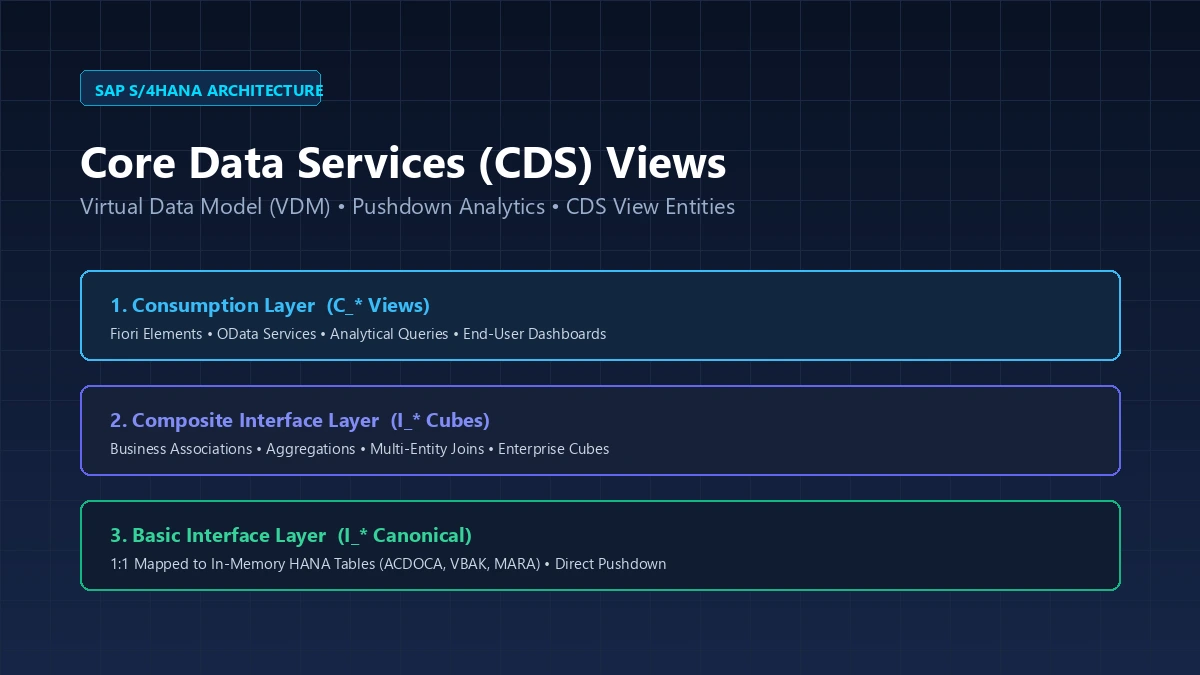
SAP CDS Views in S/4HANA: Architecture, VDM Layers, and DDL Implementation Guide
Deep dive into SAP S/4HANA Core Data Services (CDS). Understand the Virtual Data Model (VDM), Basic vs Composite vs Consumption views, DDL source code syntax, key annotations, and performance optimization on HANA database.
Read Guide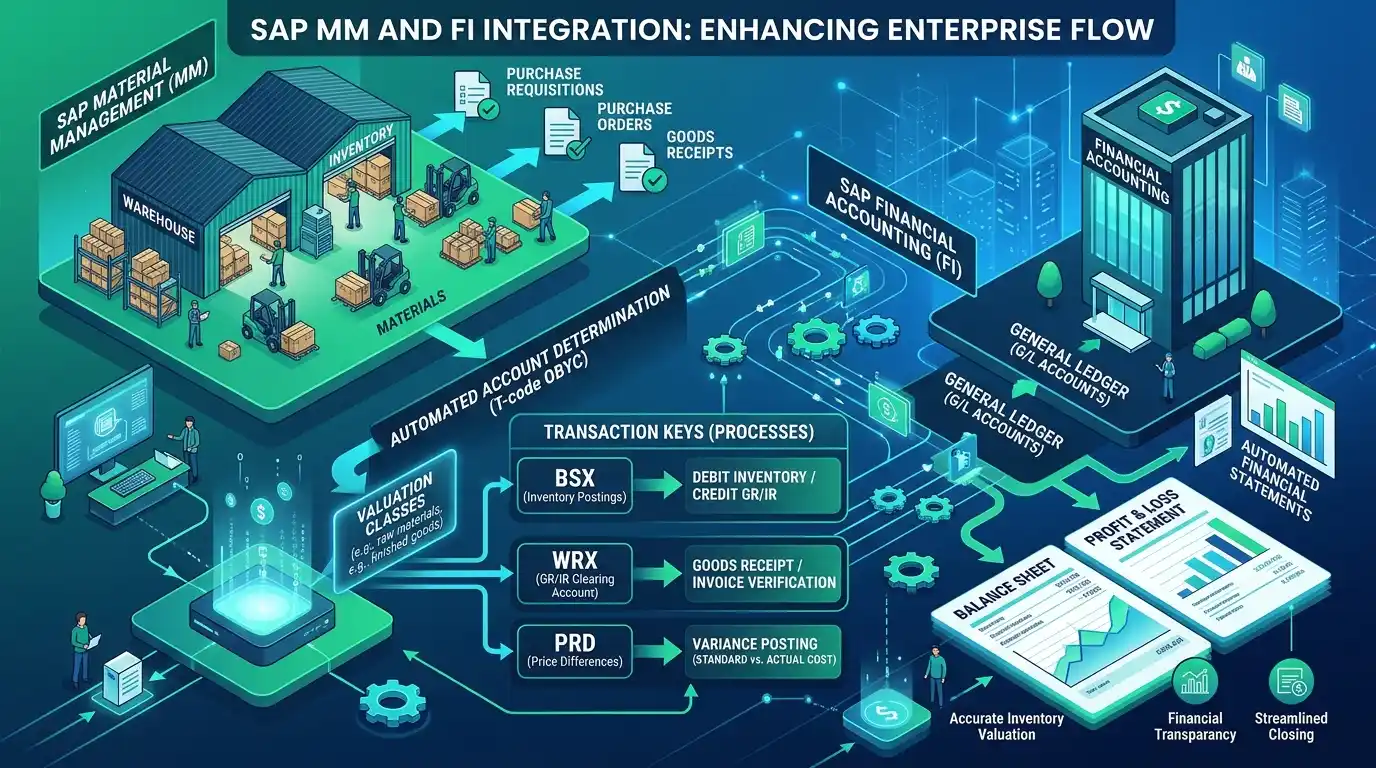
SAP MM-FI Integration & OBYC Configuration: Step-by-Step Guide with Real-Time Errors & Fixes
Master automatic account determination in SAP MM-FI integration. Complete walkthrough of Valuation Class, Account Modifiers, Transaction Keys (BSX, WRX, PRD, GBB), OBYC configuration, and how to fix common MIGO and MIRO posting errors.
Read Guide